From Research to Real Impact: Driving Urban Transitions Partnership × CapaCITIES in Action
On 10 June 2026, the DUT Conference 2026 took place in Brussels, bringing together urban stakeholders to explore how research, innovation and policy can be translated into concrete action for climate-neutral, resilient and inclusive cities.
The collaboration between the Driving Urban Transitions Partnership (DUT) and CapaCITIES is helping to bridge the gap between innovation and implementation. With over 40% of Mission Cities engaged in DUT projects, this connection demonstrates how European initiatives can work together to support cities in moving from ambitious strategies and pilot activities to scalable, real-world urban solutions.
Organised within the framework of the European Partnership Driving Urban Transitions – DUT, the conference gathered representatives from academia, public authorities, the private sector, civil society, policymakers, European institutions and urban initiatives. The event provided a space for dialogue, knowledge exchange and networking around sustainable urban transitions.
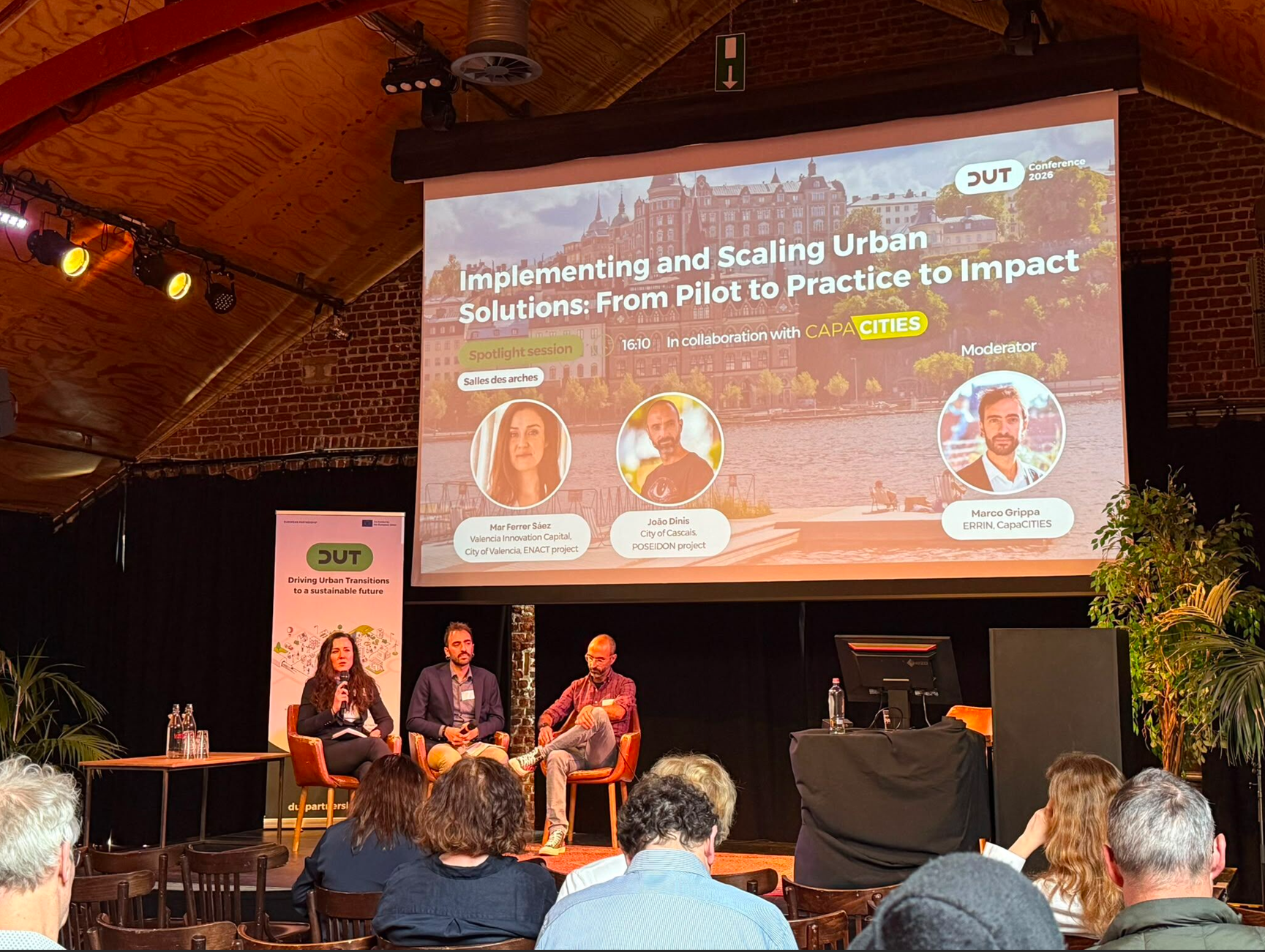
A key moment of the conference was the spotlight session “Implementing and Scaling Urban Solutions: From Pilot to Practice to Impact”, moderated by Marco Grippa from ERRIN. The session featured inspiring contributions from Mar Ferrer Sáez from Valencia and João Dinis from Cascais, who shared how DUT-funded projects — including the ENACT 15mC project and the POSEIDON project — are moving beyond the pilot phase and into real-world application.
Their contributions highlighted an essential message for Europe’s urban transition: scaling innovation is not only about developing solutions. It also requires strong collaboration, the active involvement of local entities, strategic alignment and real-world validation from the bottom up.
In this process, national platforms such as citiES 2030 in Spain and Cidades pelo Clima in Portugal stand out as key enablers. By aligning cities around shared ambitions, these platforms help strengthen political backing, unlock funding opportunities and transform strategies into bankable, scalable solutions through shared expertise.
They also connect cities of different sizes, enabling smaller municipalities to actively participate and benefit. At the same time, they can support joint procurement and market scale, making urban innovation more viable and impactful.
The message emerging from the session was clear: national platforms are essential to moving from pilot projects to scalable, high-impact urban solutions, unlocking replication across territories.
The wider DUT Conference 2026 programme explored the role of cities in the current Decade of Action and the urgency of translating high-level European and global objectives — including the Urban Agenda for the EU, the UN Agenda 2030, the European Green Deal and the Competitiveness Compass — into tangible local outcomes.
Sessions such as “The (Soft) Power of Cities in the Current Crisis”, “From Promise to Proof – A Reality Check from Cities” and “Beyond Silos – Can Europe Align Research, Policy and Investment for Its Cities?” addressed the importance of transdisciplinary collaboration, stronger links between local experience and European urban policy, and better alignment between research, policy and investment.
The conference also showcased results and solutions from the first generation of DUT-funded projects in areas such as the 15-minute City, circular urban economies and Positive Energy Districts, while offering insights into DUT’s strategic direction towards 2033 and its flagship activities, including the DUT City Panel and the Urban Doers Community.
Through its connection with DUT and other European initiatives, CapaCITIES contributes to the wider effort of helping cities move from research and pilot innovation towards implementation, replication and scalable urban impact.