Governance at Scale: Delivering CHAMP Objectives via Integrated National Platforms at Innovate4Cities 2026
Hosted for the first time on the African continent, the 2026 Innovate4Cities Conference (I4C26) took place in Nairobi from 21 to 24 June 2026. The conference brought together researchers, city leaders, practitioners and innovators to connect climate science with the policies and decisions shaping cities worldwide.
The backdrop to the conference was increasingly urgent. Current emissions trajectories are placing the world on course for a period of climate overshoot, with global temperatures likely to exceed the 1.5°C threshold by the end of this decade. Cities are at the centre of this reality, facing compounded risks, deepening uncertainty and a growing likelihood of reaching or exceeding adaptation limits. At the same time, mitigation efforts will need to accelerate, with cities playing an increasingly important role in achieving net-negative emissions.
These challenges are unfolding alongside persistent poverty and inequality, as well as profound impacts on ecosystems and human well-being. Responding effectively will require more integrated, forward-looking and collaborative approaches to urban governance, planning and decision-making.
Across the conference, sessions addressed a wide range of topics, including climate mitigation and adaptation measures in the built environment, the use of AI for effective monitoring, and the challenge of moving from strategy to implementation. Multi-level governance was a central theme, alongside discussions on the perspectives of youth and the impacts of climate change on vulnerable groups.
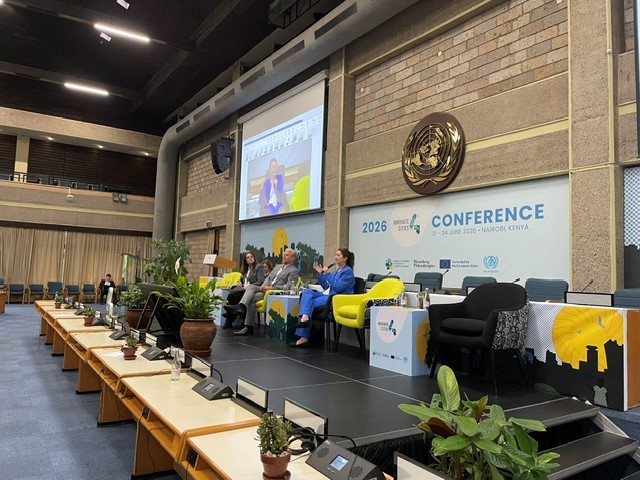
On the first day of the conference, CapaCITIES, the Driving Urban Transitions Partnership, the Urban Transitions Mission, the Global Covenant of Mayors for Climate & Energy and Viable Cities hosted a joint high-level session titled Governance at Scale: Delivering CHAMP Objectives via Integrated National Platforms.
The session focused on the growing role of national platforms that support cities in their climate action journey. Around the world, these platforms are emerging as important mechanisms for strengthening multi-level governance, delivering on the Paris Agreement and Nationally Determined Contributions (NDCs), and supporting the implementation of national climate action plans at the local level. Their strong connections to cities, together with their engagement in international partnerships, make them key vehicles for advancing climate action.
The discussion explored how European and international initiatives, including the Coalition for High Ambition Multilevel Partnerships (CHAMP), the Urban Transitions Mission (UTM), Mission Innovation, the EU Mission for Climate Neutral and Smart Cities and CapaCITIES, can be connected to support cities in becoming climate-neutral and resilient.
The session showcased concrete examples of multi-level collaboration, outcomes and best practices from countries, cities and national platforms around the world. It also highlighted how cooperation can be strengthened by connecting initiatives and approaches, with the aim of inspiring long-term partnerships between Europe and the Global South.
CapaCITIES was highlighted as a key initiative to help support and scale national platforms across Europe, while the upcoming COP31 was identified as an opportunity to scale ambition globally.
Questions raised by the audience pointed to the importance of including the perspectives of youth and groups most vulnerable to the effects of climate change, as well as considering the wider implications of the transition needed.