Strengthening multi-level cooperation for climate-neutral cities in Finland
Finnish Mission Cities and the national Cities Mission network gathered in Turku on 26th of August to turn shared climate challenges into collaboration, policy priorities and coordinated action. The programme began with a NetZeroCities workshop on urban logistics, where cities and other stakeholders explored a shared vision and future cooperation models.
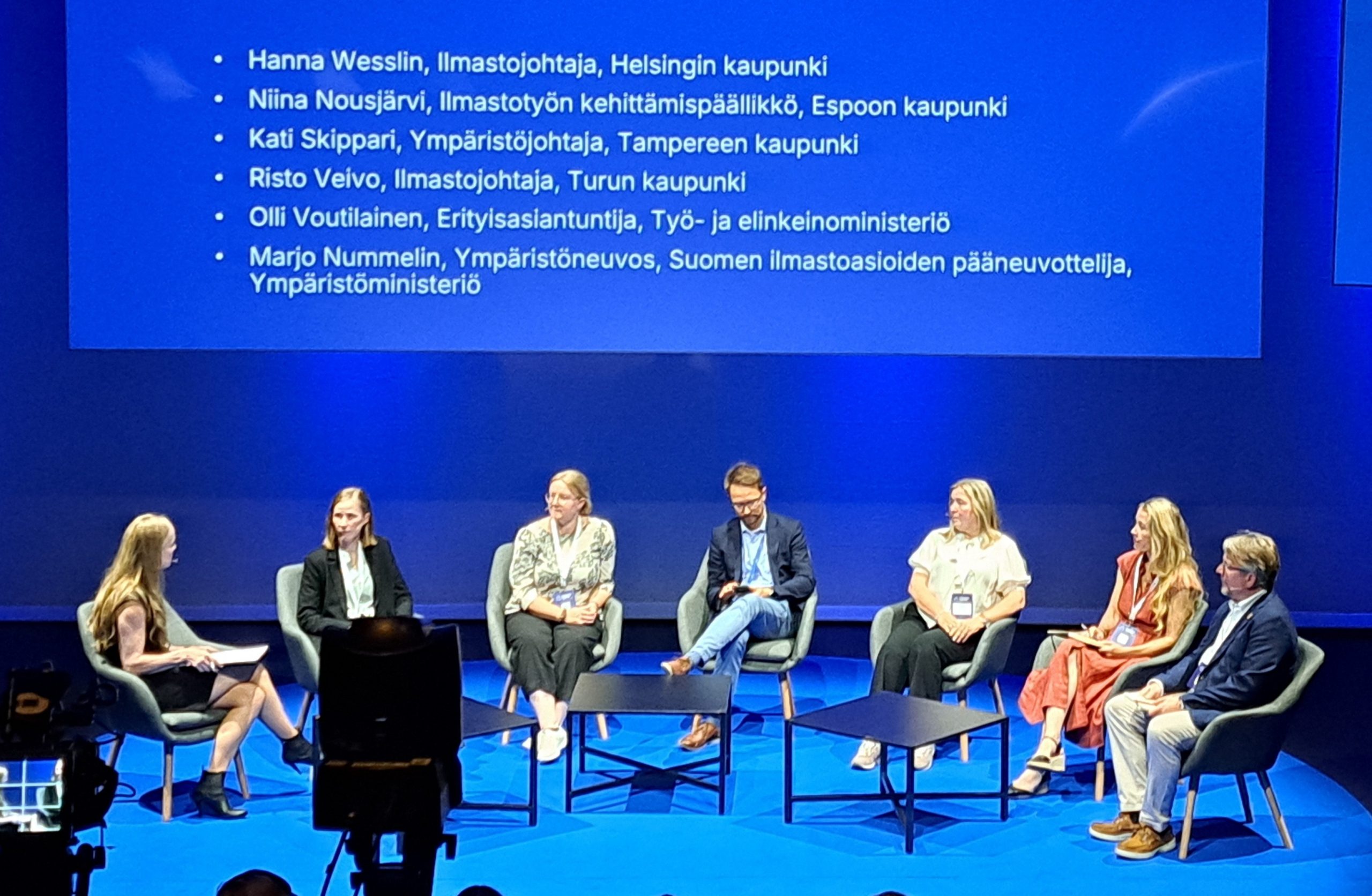
At the Europe Forum, the City of Turku hosted Turku Climate Forum, showcasing the achievements of Finnish frontrunner cities and the challenges they face on the path towards climate neutrality. Philippe Froissard from the European Commission congratulated the Finnish cities as “pioneers among the pioneers”.
Cities presented concrete examples of climate actions. Suvi Aho from Vaasa introduced Finland’s largest energy storage project. Ilkka Räsänen from Lappeenranta emphasised communication with residents and cooperation with researchers as ways to guide and accelerate development. Johanna Särkijärvi described Lahti’s climate actions combined with efforts to help local businesses identify new opportunities, including in urban logistics. Marjo Nummelin from Ministry of Environment stated that cities climate work has a major impact, and positive examples from all levels are needed.
Olli Voutilainen as the leader of the Finnish cities mission network from the Ministry of Economic Affairs and Employment highlighted cities’ climate actions’ wider impacts through climate handprint and their important role as innovators. The panel identified mobility emissions as a common challenge requiring coordinated action at city, national and EU levels. Examples included high-capacity electric buses in Tampere and Helsinki’s work to strengthen electric-vehicle charging infrastructure and the electricity grid. Hanna Wesslin from the City of Helsinki also called for the courage to discuss reducing the need for transport. Looking beyond 2030, Risto Veivo from the City of Turku highlighted consumption-based emissions, mobility emissions and energy poverty as challenges that must be addressed to enable more sustainable lifestyles.
The cities called for predictable and consistent policies, a broader range of policy tools, suitable funding instruments, stronger multi-level governance, and science-based knowledge to support decision-making. The panellists also underlined the importance of keeping climate challenges, solutions and support needs on the political agenda while other urgent issues compete for attention. Partnerships and peer learning across governance levels can strengthen collaboration and inspire further climate action.
The Turku gathering demonstrated how sustained collaboration between cities, ministries and European support initiatives can translate local experience into coordinated actions across governance levels.